Advanced Gabion Mesh Systems For Soil Stabilization Landscape Structures
Introduction
Soil instability, erosion, and poor drainage are common problems in construction and landscape projects. Traditional rigid structures such as concrete walls often crack under pressure or ground movement, leading to high maintenance costs and reduced lifespan. Engineers and contractors are increasingly turning to gabion mesh as a reliable and flexible alternative.
Used in gabion wall, gabion box, and gabion basket systems, this solution combines durability with permeability. Modern welded gabion designs further improve strength and appearance, making them suitable for both infrastructure and decorative applications.
What Is gabion mesh
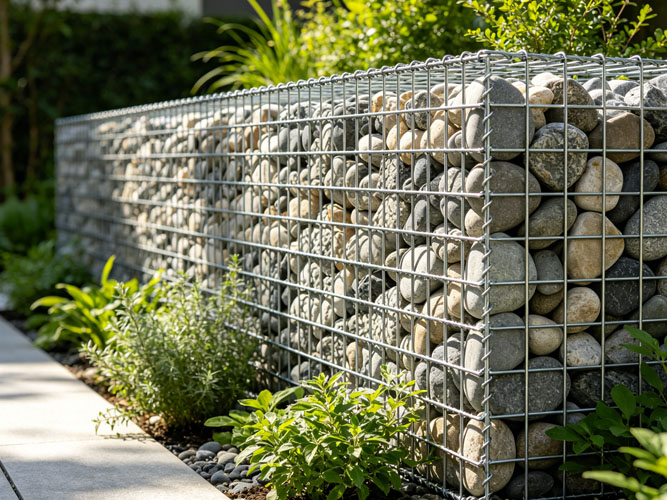
Gabion mesh is a steel wire mesh used to create stone-filled containers known as gabion cages. These cages are assembled on-site and filled with natural stones to form stable, permeable structures.
From an engineering standpoint, gabion mesh functions as a flexible retaining system. It distributes loads evenly, adapts to ground movement, and allows water to pass through freely. This reduces hydrostatic pressure and prevents structural failure, which is common in rigid retaining systems.
Types ofgabion mesh
gabion
A gabion is a general term for a mesh container filled with stones. It is widely used in erosion control, riverbank protection, and slope stabilization projects.
gabion box
Gabion boxes are rectangular units that can be stacked to form large retaining structures. They are commonly used in infrastructure projects such as highways and embankments.
gabion basket
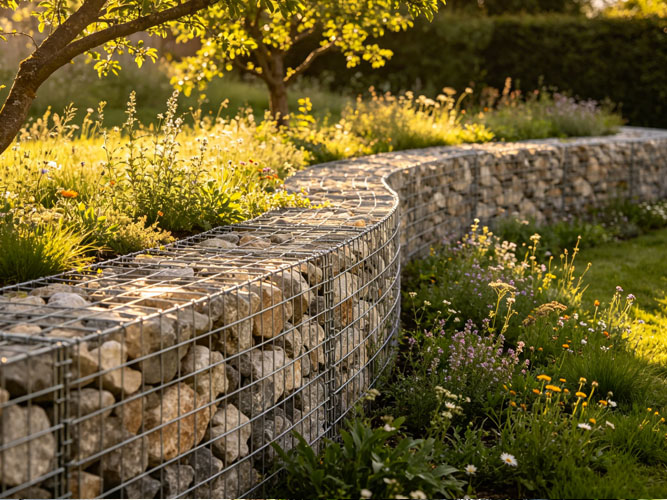
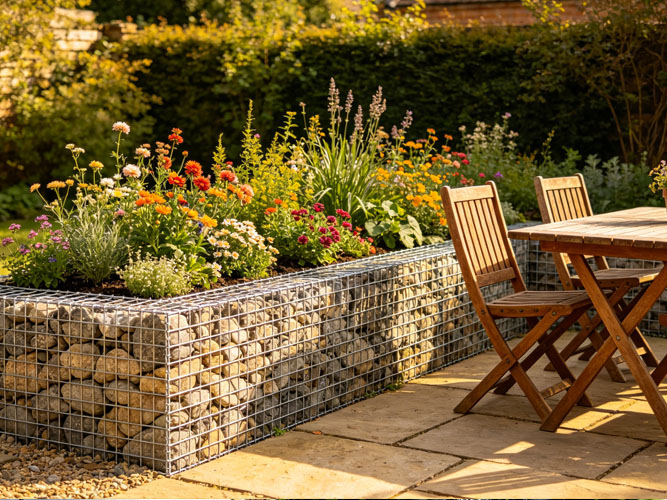
A gabion basket is typically smaller and more flexible. It is often used in landscape design, garden walls, and decorative features where both function and appearance are important.
gabion mesh Materials
PVC
PVC-coated gabion mesh provides excellent corrosion resistance. It is ideal for coastal regions, humid climates, and environments exposed to chemicals, ensuring long service life.
PP
PP-coated mesh offers lightweight protection and flexibility. It is suitable for landscaping projects and applications where ease of installation is required.
Performance and Efficiency
The effectiveness of gabion mesh comes from its unique structural properties. Flexibility allows it to adapt to ground settlement without cracking, making it suitable for unstable soils and seismic regions.
Permeability ensures efficient drainage. Water flows through the stone-filled gabion cage, preventing pressure buildup behind the structure. This eliminates the need for additional drainage systems.
The mass of the stones provides strong resistance against external forces such as soil pressure and water flow. Welded gabion systems enhance this performance by offering higher rigidity and uniform structure, making them suitable for heavy-duty applications.
In landscape projects, gabion structures also provide natural aesthetics. The combination of steel mesh and stone creates a modern and environmentally friendly appearance.
How to Choose gabion meshl
Choosing the right gabion mesh depends on several key factors.
First, consider load requirements. For heavy structures, thicker wire and welded gabion systems are recommended. Second, evaluate environmental conditions. PVC coating is ideal for corrosive environments, while PP is suitable for lighter applications.
Third, determine the purpose of the project. Use gabion boxes for structural walls and gabion baskets for decorative applications. Finally, ensure proper mesh size and stone compatibility to maintain drainage and stability.
Common Problems
clogging
Clogging occurs when fine particles accumulate between stones, reducing water flow and increasing pressure behind the structure.
scaling
Scaling results from mineral deposits forming on stone surfaces, especially in water-exposed environments. It mainly affects appearance.
aging
Aging is caused by long-term exposure to sunlight, moisture, and chemicals. Over time, this may lead to coating degradation and reduced durability.
Maintenance Tips
Regular maintenance helps extend the life of gabion mesh systems. Inspect coatings for damage, ensure proper drainage, and replace any missing stones. Remove excessive vegetation and check alignment after extreme weather conditions to maintain stability.
Real Engineering Experience
Case 1 Riverbank Stabilization
A riverbank project used gabion boxes to control erosion caused by seasonal flooding. The system allowed water flow while maintaining structural integrity.
Case 2 Commercial Landscape Design
In a commercial complex, gabion baskets were used to create decorative walls and seating areas, combining durability with modern aesthetics.
Case 3 Highway Slope Protection
A mountainous highway project installed welded gabion systems to stabilize slopes. The flexible structure adapted to soil movement and improved safety.
Conclusion
Gabion mesh is a versatile and efficient solution for construction and landscape applications. It provides flexibility, drainage, and strength that traditional materials cannot match.
By selecting the right type of gabion box, gabion basket, or welded gabion, projects can achieve long-term performance with minimal maintenance while maintaining an attractive appearance.
FAQ
Q1 What is gabion mesh mainly used for
It is used for erosion control, retaining walls, slope stabilization, and landscape projects.
Q2 Is welded gabion suitable for heavy loads
Yes it provides higher strength and rigidity compared to other types.
Q3 How long does gabion mesh last
It can last several decades depending on coating and environmental conditions.
Q4 Can gabion walls be decorative
Yes they are widely used in modern landscape and architectural design.
Q5 What stones are best for gabion fill
Durable stones such as granite and basalt are recommended.